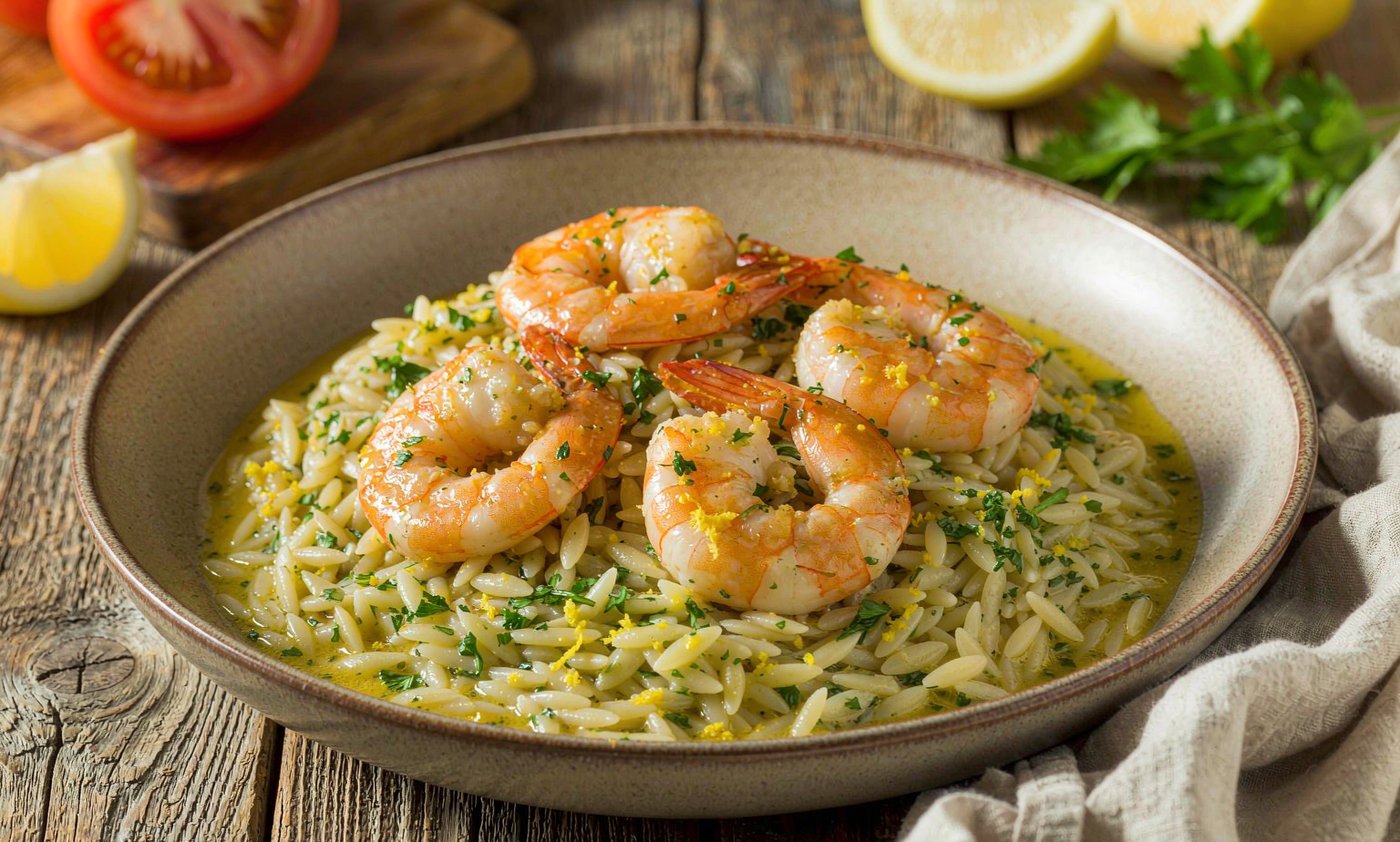
Garlic Butter Shrimp Orzo
The difference between a good shrimp pasta and a very good one is usually whether anyone bothered with the shells.

Cook the orzo in shrimp stock
The difference between a good shrimp pasta and a very good one is usually whether anyone bothered with the shells. Simmering them for ten minutes gives you a stock that tastes distinctly of the sea, and using that stock to cook the orzo means the pasta itself carries the flavour instead of just sitting next to it.
It is not extra work so much as reordered work. You are peeling shrimp you were going to peel anyway, and boiling water you were going to boil anyway. The only real cost is ten minutes of unattended simmering, which is enough time to chop the garlic and pour a glass of something.
The finishing move is butter. Off the heat, in three additions, swirling rather than stirring, until the sauce goes glossy and thick enough to coat the orzo. Add it all at once and it will split.
Ingredients
Instructions
Peel the shrimp, keeping the shells in a saucepan. Refrigerate the peeled shrimp while you make the stock.
Cover the shells with the water, add the bay leaf and a pinch of salt, and bring to a bare simmer. Cook for 10 minutes, then strain into a jug — you want about 550 ml. Top up with water if you have less.
Wipe the pan, add 2 tablespoons of olive oil and set over medium heat. Add the orzo and toast it for 2 minutes, stirring, until the grains smell nutty and look faintly golden.
Pour in the stock, bring to a simmer, and cook for 9 to 11 minutes, stirring often, until the orzo is al dente and the liquid has reduced to a loose sauce. If it dries out before the pasta is ready, add hot water a splash at a time.
While the orzo finishes, heat the remaining oil in a separate pan over medium-high heat. Add the garlic and chilli flakes and cook for 45 seconds, just until the garlic turns pale gold — no further.
Add the shrimp in one layer and cook for 90 seconds per side, until they turn opaque and curl. Tip the entire contents of the pan, oil included, over the orzo.
Take off the heat. Add the lemon zest and juice, then the cold butter a cube at a time, swirling the pan continuously until each piece disappears before the next goes in.
Fold through the parsley, season to taste and serve immediately, in warm bowls, with the lemon halves alongside.
Testing notes & substitutions
No shells? Use bottled stock
300 ml of good-quality shellfish or chicken stock plus 250 ml water gets you most of the way. It will be less sweet, so add an extra squeeze of lemon at the end.
Orzo sticks if you stop stirring
It has more surface starch than most pasta and will catch on the base. Stir every thirty seconds during the last five minutes of cooking.
Do not overcook the shrimp
They are done the moment they form a loose C shape. A tight O means they are past it. Residual heat in the pan will finish them while you make the butter sauce.
Questions we get a lot
Can I use frozen shrimp?
Yes, but thaw them in the fridge and dry them thoroughly — frozen shrimp release a lot of water and will boil rather than sear. Look for raw rather than pre-cooked, since pre-cooked ones turn rubbery in the pan.
Why did my butter sauce go grainy?
The pan was too hot when the butter went in. Take it off the heat entirely, let it settle for thirty seconds, then start adding. If it has already split, a teaspoon of cold water and a hard swirl will usually bring it back.
Is this a good dish to make ahead?
Not really — orzo keeps drinking liquid and turns stodgy within twenty minutes. Leftovers reheat best in a pan with a splash of stock rather than a microwave.
Dana Reyes
Dana has cooked professionally for eleven years and has been testing recipes for Hearth & Thyme since 2019. She writes about weeknight cooking, slow breads, and the small techniques that quietly change a dish. Every recipe she publishes is cooked at least twice, in an ordinary home oven.
Keep cooking
More weeknight dinners

One-Pan Lemon Chicken & Orzo
Sticky Ginger Chicken Thighs