Rosemary Sea-Salt Focaccia
The overnight focaccia is better, and this one is faster, and both deserve a place.

The same-day shortcut that still tastes slow
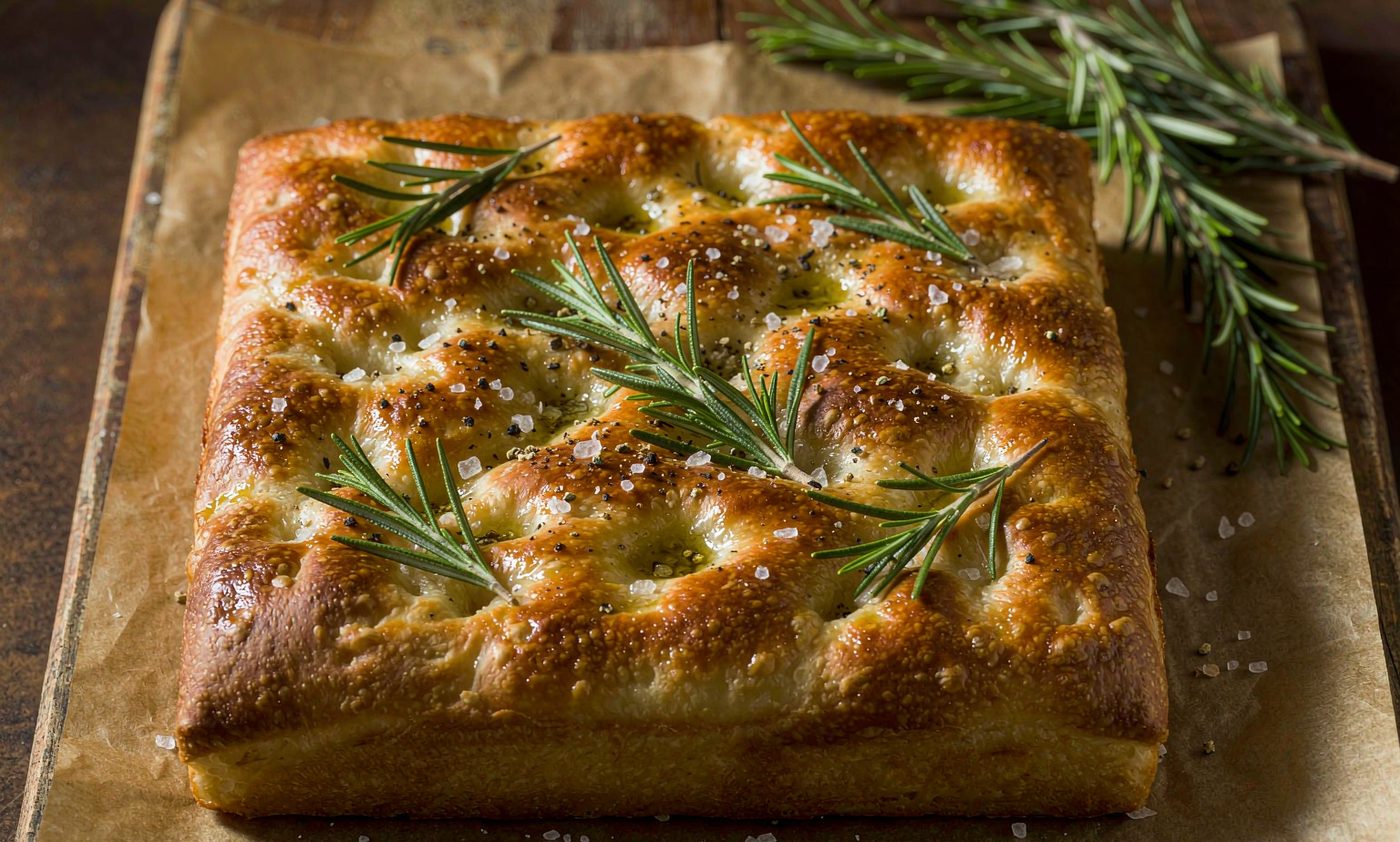
The overnight focaccia is better, and this one is faster, and both deserve a place. What makes the same-day version work is a wetter dough and more oil: hydration gives you the open crumb in a few hours that a cold ferment would produce overnight, and generous oil keeps the crust from drying out before the middle is baked.
Rosemary and sea salt are the classic finish, and the order matters. Rosemary goes on before baking so it crisps and perfumes the oil; the flaky salt goes on halfway through, so it stays in visible flakes rather than dissolving into the crust.
This is a three-hour recipe with about fifteen minutes of actual attention. The rest is waiting, which is the nature of bread and not something to try to engineer away.
Ingredients
Instructions
Mix the flour, water, fine salt, yeast and sugar in a large bowl for a minute, until no dry flour remains. Cover and rest for 20 minutes.
Do three sets of stretch-and-folds, 25 minutes apart, folding the dough over itself from all four sides each time. After the third set it should be smooth and noticeably stronger.
Cover and prove at room temperature for 60 to 75 minutes, until roughly doubled and bubbly at the edges.
Pour 60 ml of the olive oil into a 30 x 23 cm tray and coat the base and sides. Turn the dough into the tray and fold it over twice. Rest for 15 minutes.
Stretch the dough gently towards the corners. Rest 10 minutes and repeat if it springs back. Cover and prove for 45 minutes, until puffy and jiggly.
Heat the oven to 230°C fan. Oil your fingers and press them down through the dough to the base at 4 cm intervals, making proper pools. Drizzle over the remaining oil and scatter the rosemary leaves.
Bake for 12 minutes, then pull the tray out and scatter over the flaky sea salt. Return to the oven for a further 10 to 12 minutes, until deep gold underneath and crisp on top.
Slide onto a wire rack and cool for 15 minutes before cutting into squares.
Testing notes & substitutions
Warm water, not hot
Around 30°C is right — warm to the wrist, not to the touch. Hotter water kills the yeast and you will be waiting all afternoon.
Salt late
Flaky salt added at the start dissolves into the crust and disappears visually. Adding it at the halfway point keeps the flakes intact and gives you the salt burst that makes focaccia taste like focaccia.
Olive oil is an ingredient, not a lubricant
Use a good one and use more than feels comfortable. The oil pools are what make the top crisp and the underside fry rather than bake.
Questions we get a lot
Can I leave it to rise longer?
Yes — up to three hours at room temperature, or overnight in the fridge. Longer always tastes better. This recipe is the floor, not the ceiling.
Why is my focaccia pale underneath?
The tray was not hot enough when the dough went in, or the oil was too thin. Put the oiled tray in the oven for five minutes before adding the dough if your oven runs cool.
Can I add other toppings?
Halved cherry tomatoes, sliced olives, thin red onion and torn mozzarella all work. Add anything wet after the first twelve minutes, not before.
Dana Reyes
Dana has cooked professionally for eleven years and has been testing recipes for Hearth & Thyme since 2019. She writes about weeknight cooking, slow breads, and the small techniques that quietly change a dish. Every recipe she publishes is cooked at least twice, in an ordinary home oven.
Keep cooking
More baking & breads
Overnight No-Knead Focaccia
Everyday Sourdough Boule